What Color Handbag Goes With Everything
— The Honest Answer
The question of what color handbag goes with everything is one of the most consistently searched style questions online — and the answers it tends to receive are not particularly useful. Most lists say: get black. Or camel. Or nude. Or all three. They rarely explain the reasoning behind the recommendation, and they almost never acknowledge that the right answer depends entirely on the wardrobe it needs to work with.
There is an honest answer to this question, and it is worth taking seriously. Because the color of an everyday bag is not a minor decision. A bag carried daily for two or three years will appear in more photographs, more memories, and more outfits than almost any other single item you own. Getting the color right has a quietly significant impact on how effortlessly your wardrobe functions.
This guide covers both the universal principles and the personal ones — what makes certain shades genuinely versatile, and how to think about your own wardrobe specifically.
Why "Just Get Black" Is Incomplete Advice
Black is a credible answer for many people. It is genuinely versatile, reads as polished across almost every context, and works with the majority of color palettes. But it is not universally correct — and understanding why helps clarify what "versatile" actually means in practice.
A bag works with an outfit when it neither clashes with it nor disappears into it. It functions as a considered element — present, complementary, adding something to the overall picture. Black achieves this with most mid-to-dark palettes, with navy, charcoal, white, and many prints. But against warm-toned wardrobes — camel coats, rust-colored knitwear, olive separates, rich earth tones — a stark black bag can read as a jarring interruption rather than a natural complement.
The reason is tonal. Black is a cool, high-contrast neutral. Warm wardrobes are built on a different tonal register. The handbag color that goes with everything is therefore not a single shade — it is a shade that aligns with the dominant tone of your existing wardrobe.
The Tonal Principle — Warm Wardrobes and Cool Wardrobes
Most wardrobes have a dominant tonal register, even if their owner has never explicitly noticed it. A look at what you reach for most often — and the undertones of those pieces — will tell you a great deal about which bag colors will function most seamlessly within it.
Warm-toned wardrobes lean toward camel, cream, ivory, olive, rust, brown, terracotta, warm white, sand, and mustard. The bags that work best here are those in the same temperature register: camel, tan, cognac, warm off-white, rich brown, and warm-toned or very dark tan.
Cool-toned wardrobes lean toward navy, grey, stark white, burgundy, forest green, blush, lavender, and charcoal. These palettes are served well by classic black, cool-toned taupe, grey-beige, and soft burgundy — with classic tan used as a warm accent against cooler pieces.
Neutral or mixed wardrobes — which are very common — benefit from a bag color that sits in the middle of the tonal spectrum. True camel, classic tan, and mid-toned cognac occupy this position naturally, which is why they function so reliably across a wide range of outfits. They are warm enough to complement most warm tones and light enough not to clash with cool ones.
Insider Note: The fastest way to identify your wardrobe's dominant tone is to lay out the ten pieces you wear most often and look at them together. If they share an underlying warmth — yellowed whites, earthy neutrals, warm prints — you have a warm-toned wardrobe. If they tend toward cool, blue-based neutrals and brighter whites, you have a cool-toned one. Most people find this exercise immediately clarifying.
The Shades That Earn the Most Daily Use
With the tonal principle in mind, the shades that consistently perform best as everyday bags are worth examining individually — not as universal recommendations, but as options with specific strengths.
Camel and warm tan. The most genuinely versatile option for a warm or mixed wardrobe. Camel reads as a warm neutral that complements rather than competes — with white, cream, navy, olive, rust, denim, and most prints. It has enough visual presence to register as a considered choice while being quiet enough to never dominate. In leather, camel also tends to age exceptionally well — deepening slightly with use and developing a richness that a new bag does not yet have.
Cognac. Slightly deeper and more saturated than camel, cognac carries more visual weight. It works particularly well as the warm element within a cooler outfit — a cognac bag against a grey and white look creates an instant sense of considered depth. Against very warm outfits it can feel too rich, which is why it works best in wardrobes with some tonal range rather than exclusively warm palettes.
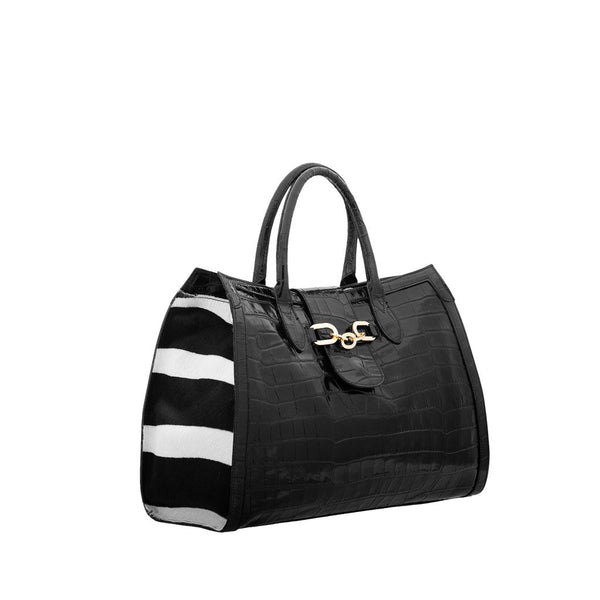
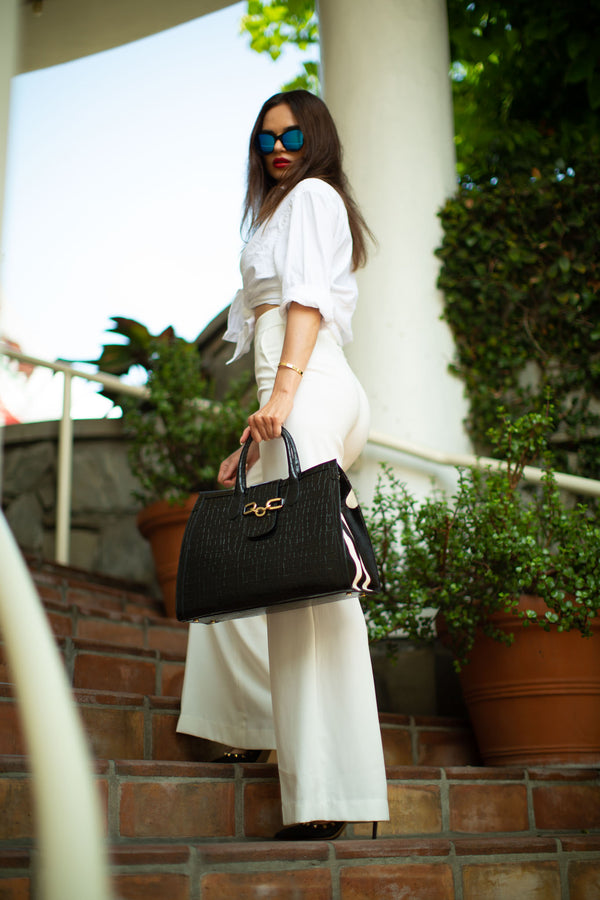
Classic black. The strongest performer for cool-toned wardrobes and the most formally versatile option across occasions. Black transitions from weekday work wear to evening dressing more readily than any other shade, and it creates clean contrast against light-colored outfits that suits a polished, editorial aesthetic. Its limitation — cooler tonal temperature — is worth acknowledging rather than ignoring.
Warm off-white and parchment. An underused option that deserves more consideration, particularly for summer. A bag in warm off-white or natural parchment leather works especially well in wardrobes built on linen, cotton, and light neutrals. It reads as elevated without the starkness of bright white, and it adds a tone that genuinely complements sun-warmed skin. The practical consideration is maintenance — lighter leathers require more attention to keep looking their best.
Warm taupe and greige. The most genuinely neutral option on this list. A well-chosen warm taupe sits at the intersection of beige and grey, functioning across both warm and cool palettes without fully belonging to either. It is the least visually interesting choice — but that is precisely its strength as a purely functional everyday bag color.
What "Goes With Everything" Actually Means
It is worth being precise about what we are actually asking here. We are almost never asking for a bag that will look perfect with every outfit. We are asking for a bag that will work — that will not require thought, that will not clash, that will not feel out of place — with the full range of things we actually wear.
That is a different and more achievable standard. And by that standard, the color that serves you best is not a universal recommendation. It is the one that shares a tonal register with the majority of your wardrobe, has enough visual weight to register as a choice rather than a gap, and works across the range of contexts your daily life actually includes.
For most people building a considered everyday wardrobe, that means one of the warm neutrals — camel, tan, or cognac — used as the primary bag color, with black as a secondary choice for occasions that require cooler formality. Two bags, chosen with this framework in mind, cover a remarkable proportion of what an everyday wardrobe needs.
When to Break the Rule
The principle of tonal alignment is a guide, not a constraint. There is a particular pleasure in wearing a bag that introduces deliberate contrast — a deep burgundy leather shoulder bag against an otherwise neutral outfit, a warm cognac piece worn with cool grey and white. Used intentionally, color contrast in a bag adds personality and specificity to a look.
The distinction between contrast that works and contrast that clashes is usually intentionality. A bag color that has been chosen — rather than simply arriving by default — reads differently, even when it is unexpected. The outfit that grows around it tends to accommodate it.
Which brings the question of color back, as most style questions do, to the same essential answer: the best choice is a considered one.
If you are looking for an everyday bag in a color and construction quality worth building around, you can explore our everyday shoulder bags — each selected for wearable proportion, quality leather finish, and the kind of tonal range that integrates naturally into a well-built wardrobe.
Madison Emami is the founder and Executive Editor of Maison De Madisse — curating collections and guiding the editorial vision of Smart Style Chronicles one thoughtfully chosen piece at a time.